
“Now, bring us some figgy pudding, now, bring us some figgy pudding, now bring us some figgy pudding, and bring it right here!”
Ever wonder what carolers are demanding after wishing you a Merry Christmas and a Happy New Year?
Being from South Africa, of British and Dutch descent, I have long loved Christmas pudding. It’s a moist, dense, crumbly dessert of dried fruit (hence the “figgy” or “plum”), spices, flour, and breadcrumbs, served warm in a bowl with custard (a sauce made with milk, eggs, and sugar). Traditionally, a coin would be hidden in the pudding, which would make its finder lucky (if no broken teeth were involved). My Granny would put a coin in each plate she served, making sure each person around the table felt both lucky and loved.
The first Christmas of my marriage, I decided to purchase 1.6-liter Christmas Pudding molds to steam pudding for our new household. I ordered vegetable suet (the original stuff is raw beef fat), glazed orange peel, flour, breadcrumbs, and lots of dried fruit. I mixed it all together, put the molds in two pots of water, and started boiling. The recipe called for steaming these puddings for four to five hours. A few hours in, all our windows were steamed up. Eventually the puddings were done. And I don’t remember making them again.
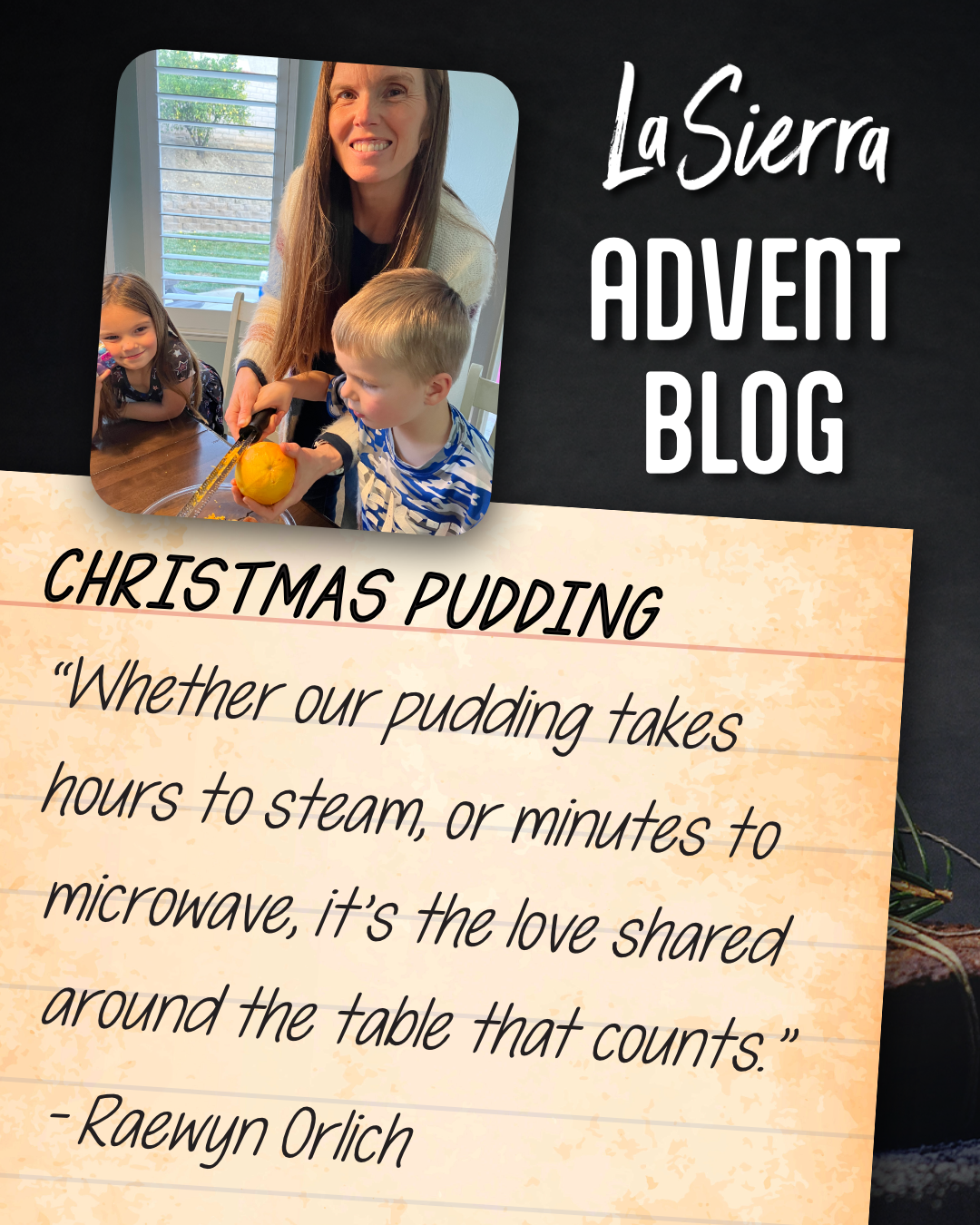
Until my husband shared a microwavable version that he had seen from Prue Leith, one of the judges from The Great British Bake Off. It was so much easier! And we enjoyed it just as much. Whether our pudding takes hours to steam, or minutes to microwave, it’s the love shared around the table that counts.
The concept of boiled puddings with dried fruit and spices has roots across medieval Europe. It was originally a savory-sweet mixture that was served at the beginning of a meal. Slowly the meat content decreased, and the dish became sweeter and thicker, shifting to a dessert. By the early 19th century, Christmas pudding was a recognized tradition in Britain, especially in the middle and upper classes. It was made on Stir-up Sunday, the last one before Advent, and left to mature until Christmas Day.
In Charles Dickens’ A Christmas Carol, written in 1843, the Cratchits’ modest pudding was a symbol of their family’s gratitude and celebration, despite Bob Cratchit being an underpaid and overworked employee of Mr. Scrooge. Dickens describes Mrs. Cratchit entering with the pudding, smiling proudly, affirmed by her husband, who said it was “the greatest success achieved by Mrs. Cratchit since their marriage.” Dickens goes on, “Everybody had something to say about it, but nobody said or thought it was at all a small pudding for a large family. It would have been flat heresy to do so.”
This Advent, members of our community are sharing the recipes for and meaning behind food that brings us comfort at Christmas time.
Psalm 34:8 says, “O taste and see that the Lord is good; happy are those who take refuge in him.”
Everyone is invited to this table. The gift of God becoming flesh is one that we can never earn. As Jesus told it, whether we started working at 6 am or 5 pm, we are given a living wage. Every plate is served, not only with pudding, but a coin too.
This Advent, may we slow down to taste and see God’s goodness.
May we insist with the carolers…
“We won’t go until we get some, we won’t go until we get some, we won’t go until we get some, so bring it right here!”
Vegan Christmas Pudding
Ingredients:
For the fruit:
600 grams dried fruit (could include raisins, currants, cranberries, mixed peel)
Juice and finely grated zest of 1 large unwaxed orange
½ cup of brandy or apple juice
75 grams or ¾ cup of molasses or maple syrup
1 tsp baking soda
For the pudding:
1 apple, peeled and grated (150 grams grated weight)
140 grams grapeseed oil
175 grams brown sugar (or 1 cup white sugar with 1 tbsp molasses)
175 grams breadcrumbs
140 grams self-raising flour (or 1 cup all-purpose flour, 1 ½ tsp baking powder, ¼ tsp salt)
2 tsp mixed spice (allspice, cinnamon, cloves, ginger, nutmeg)
3 tbsp juice from can of chickpeas
Step 1: Prepare the fruit. Tip the dried fruit, orange juice, and zest into a large (about 1.5 liters), microwave-safe bowl, that has been greased with unsalted butter and base-lined with a disc of baking paper. Pour over the brandy or apple juice and molasses and stir together. Cover the bowl with cling film, then pierce a few holes in the top.
Step 2: Microwave the fruit on high (100%) for 5 minutes. Carefully remove from the microwave and peel off the cling film. Stir in the baking soda, then leave to stand for 15 minutes.
Step 3: Make the pudding. Mix the grated apple, butter, sugar, breadcrumbs, flour, cinnamon and mixed spice together until well combined. Add the soaked fruit, the soaking liquid and the chickpea juice and stir together. Place a cut disc of baking paper over the mixture.
Step 4: Loosely cover the bowl with cling film and microwave on low (30%) for 20 minutes, then microwave on medium (50%) for 15 minutes, until risen and it comes away a little from the edge of the bowl. Remove from the microwave and leave to stand for 10 minutes.
Raewyn Orlich is the discipleship and nurture pastor at the La Sierra University Church.