
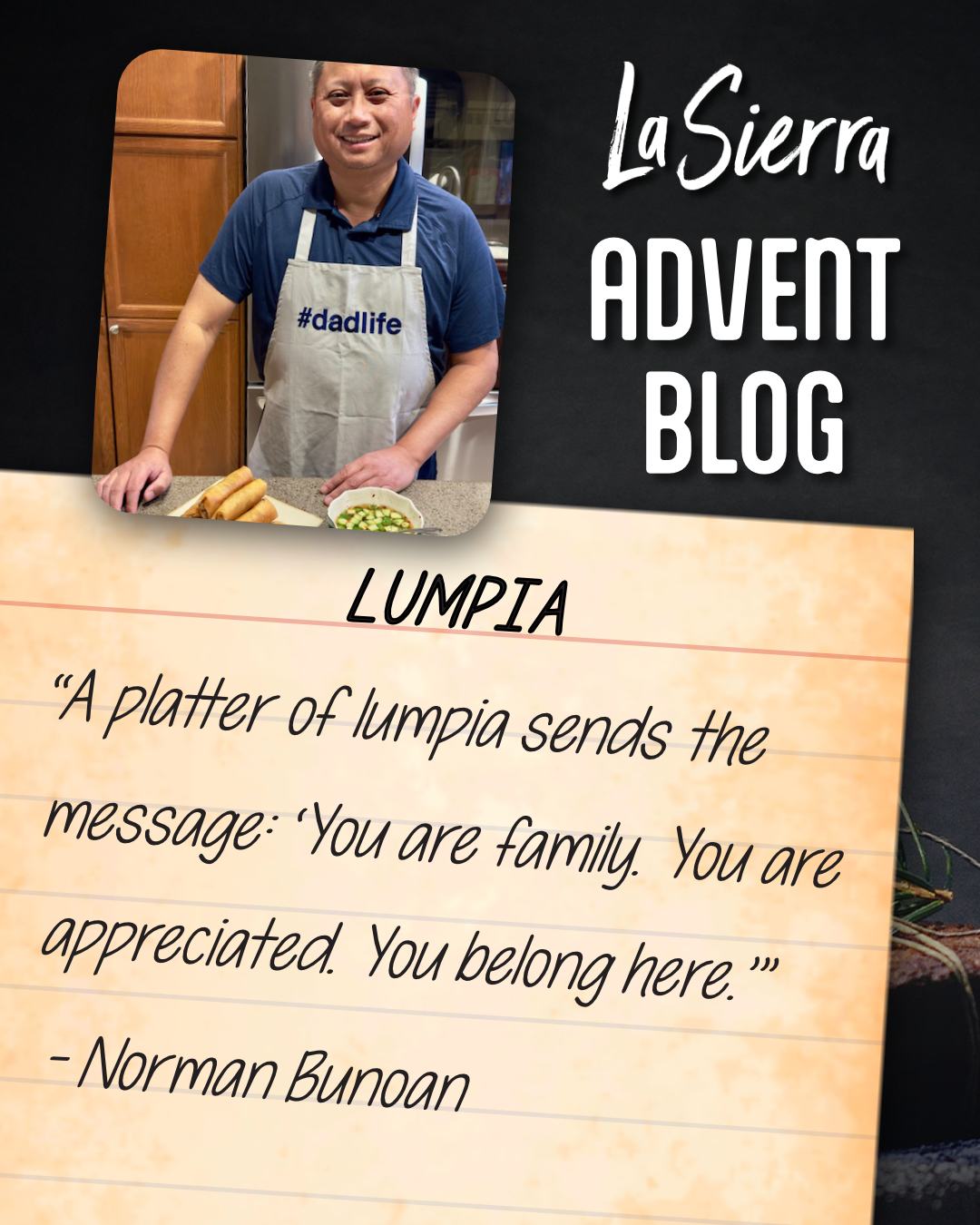
For many Filipino families, the holiday season kicks off not with the sparkle of parol lanterns or the first notes of Christmas tunes. It begins right in the kitchen. Picture a bunch of lumpia wrappers next to bowls filled with tasty ingredients, as family members gather, side by side. Lumpia, those crispy little spring rolls from the Philippines, have been a staple at celebrations for ages. But it’s about more than just that irresistible crunch; it’s a symbol of memories, family, and that deeply rooted Filipino spirit of hospitality.
Preparing lumpia echoes the true spirit of the season. It invites us to pause, collaborate and reconnect. Back when I was a kid, my mom would call my sister and me to the kitchen table on Thanksgiving, Christmas, or New Year’s Eve. She always had everything ready: separated wrappers, a delicious mixed filling, and a small bowl of water for sealing. Helping out felt like a minor chore back then. It wasn’t until later that I realized we weren’t just cooking; we were participating in a tradition that brought us closer together. With each tuck, fold and roll, my late mother was passing down something special, without even saying a word.
What really makes lumpia stand out isn’t just its golden-brown color that radiates warmth or how quickly they disappear from platters during parties. The true beauty lies in the shared experience of making them. Rolling lumpia is rarely a solo endeavor in Filipino homes; grandparents sit with grandchildren while parents guide tiny hands and siblings compete over who can roll them best. These little moments are what create lasting memories that anchor family traditions.
As I grew up and started my own family, I felt this pull to recreate those same rituals. I’d gather my kids at the kitchen island with wrappers in their tiny hands to teach them how to tuck, fold and roll. Their first attempts with Thanksgiving leftover ingredients might have been imperfect or bursting at the seams, but seeing their proud smiles mirrored my own childhood joy. The laughter that once filled my mom’s kitchen now echoed through our home. These moments weren’t just about teaching them a recipe; they were about handing down pieces of our family identity, threads woven into our culture that they could carry forward one day.
Lumpia holds significant meaning on holiday tables. Serving up a big platter of these crispy rolls represents more than just feeding people, it embodies Filipino hospitality itself. To offer food is to fully embrace your guests; a platter of lumpia sends the message: “You are family. You are appreciated. You belong here.” It is practical enough to feed a crowd, yet festive enough for a special occasion.
Every holiday season, as we once again gather around the kitchen with wrappers ready and filling prepared, I feel grateful. Grateful for the hands that taught me, for the tradition I pass on to my children, and for a dish that celebrates togetherness.
Lumpiang Gulay (Filipino Vegetarian Spring Rolls)
Ingredients:
2 tbsp oil
4 cloves garlic, finely chopped
1 medium onion, finely chopped
1 cup carrots, cubed or julienned (or shredded)
1 cup green string beans, sliced thinly (same size as carrots if cubed)
2 cups green cabbage, shredded
2 cups bean sprouts
2-3 tbsp soy sauce, or to taste
1 tbsp vegetarian oyster sauce
Salt and pepper, to taste
1 pack lumpia/spring roll wrappers paper thin variety from an Asian store and labelled as lumpia or spring roll wrappers
2 cups oil, or just enough to cover the rolls for deep-frying
Sweet chili sauce or spicy vinegar sauce, to serve for dipping, if desired
Instructions:
Step 1: Heat the oil on medium using a wok or large frying pan. When the oil is already hot, sauté the garlic and onions until aromatic, about 1 minute.
Step 2: Add the carrots, green beans and cabbage and stir-fry for about 3 minutes. Add the bean sprouts and pour in the soy sauce and oyster sauce. Season with a little pepper. Mix everything and cook for another 1-2 minutes until all the vegetables are tender but still retain some crunch. Adjust seasoning, if needed, by adding more salt, soy sauce, etc. to taste.
Step 3: Remove from the heat and place in a strainer or colander to drain all the liquid remaining. Allow to cool completely.
Step 4: To make the spring rolls, place about 2 tablespoons of the filling in one of the corners of the wrapper positioned like a diamond. Roll the corner with the filling (spreading it a little) towards the middle. Fold the sides inward to seal, then continue to roll until you have about 2 inches left of the wrapper. Using your finger, brush the edges with a little water then seal completely. Make sure it is tightly secured. Place the finished roll on a platter with the sealed side downwards. Repeat until all the filling is gone
Step 5: Heat the oil in a deep pan until hot (it is ready when bubbles appear around the tip of a wooden spoon or chopsticks). Fry the lumpia in batches, avoiding overcrowding, for about 3-5 minutes or until medium brown in color. Transfer to a metal colander lined with paper towels. Place the spring rolls upright to ensure proper draining.
Step 6: Serve with sweet chili sauce or, to be authentic, a spicy vinegar sauce. Enjoy immediately!
Norman Bunoan is passionate about cooking for his family and enjoys volunteering at La Sierra University Church – both behind the scenes at potlucks and up front as a greeter. He brings that same dedication to his role in technology at Pacific Life.