
The soldiers led Jesus away into the palace (that is, the Praetorium) and called together the whole company of soldiers. They put a purple robe on him, then twisted together a crown of thorns and set it on him. And they began to call out to him, “Hail, king of the Jews!” Again and again, they struck him on the head with a staff and spit on him. Falling on their knees, they paid homage to him. And when they had mocked him, they took off the purple robe and put his own clothes on him. Then they led him out to crucify him.
Mark 15:16-20 NIV
After Jesus was condemned in his illegal nighttime trial, the Roman soldiers guarding him placed a crown of thorns on his head. They dressed him with a purple robe, bowed to him in mocking worship, mockingly addressed him as king of the Jews, and scornfully saluted him. Adding insult to injury, they slapped and spat on his face to try to dehumanize and injure his dignity as a person. But throughout his torture and mockery, Jesus did not retaliate in word or deed. He did not meet violence with violence. Instead, as the song says, “He never said a mumblin’ word. Not a word. Not a word. Not a word” [Negro spiritual].
Thorns are first mentioned in the Bible in Genesis 3 as part of the punishment and curse meted out to Adam and Eve after they sinned. It is ironic that a crown of thorns was placed on the head of One who never sinned, Jesus Christ. While thorns are associated with curses, death, pain, sorrow, and sin, the crown of thorns was placed on the head of One who was victorious over the sting and pain of death [1 Corinthians 15:55 NIV], and who redeemed humankind from the wages of sin [Romans 6:23 NIV].
Despicable as they were, the events of Passion Week convey spiritual significance. As prophesied in Isaiah 53, Jesus was despised and rejected by men. He remained silent like a lamb on its way to the slaughterhouse. Jesus humbled himself in obedience to God’s will.
The diabolical mockery of Jesus demonstrates the extent evil takes to reject truth. On the other hand, it also demonstrates the extent God took when He sent His Son, the way, the truth, and the life [John 14:6 NIV] to redeem those who rejected truth: “For God so loved the world that he gave his one and only Son, that whoever believes in him shall not perish but have eternal life” [John 3:16 NIV].
The violent cruelty Jesus suffered was graphically portrayed in Mel Gibson’s “The Passion of the Christ” [Movie released on February 25, 2004]. About the film, Mr. Gibson revealed that personal tribulations a few years before partially influenced him to make the film. He struggled with overcoming substance abuse and suicidal thoughts. But turning to God in prayer and rereading the Bible, he went through a spiritual awakening. His faith in Jesus was rekindled.
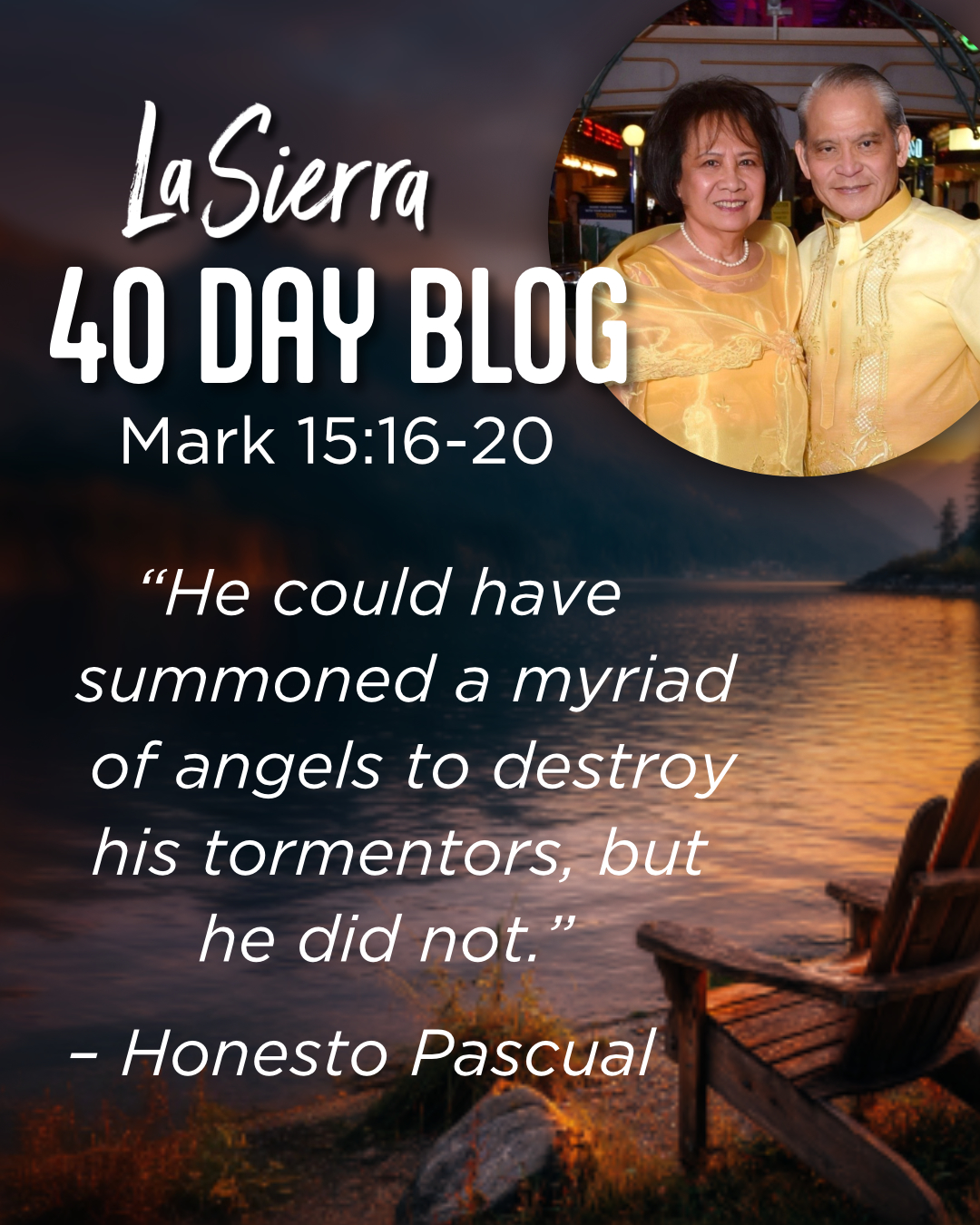
To me, the events of Passion Week convey wonder, amazement, and admiration for Jesus, as he remained calm and non-retaliatory throughout his suffering and humiliation. He could have summoned a myriad of angels to destroy his tormentors, but he did not.
As someone anonymously wrote online: “The mockery of Christ is a powerful narrative that invites reflection on the nature of faith, the cost of redemption, and the call to respond to Jesus’ sacrifice with reverence and gratitude. It challenges believers to consider their own responses to Jesus’ kingship and to live in a manner that honors his sacrifice. Through understanding these events, Christians are encouraged to stand firm in their faith, even in the face of mockery or misunderstanding from others.”
Trembling, I stand in awe of Jesus’ response to those who cruelly mocked him. “When they hurled their insults at him, he did not retaliate; when he suffered, he made no threats, Instead, he entrusted himself to him who judges justly [1 Peter 2:22 NIV]. Help me, Lord, to emulate him.
Honesto and Carmencita Pascual are celebrating their 57th wedding anniversary today. Their photo above was taken on their Golden Anniversary celebration.