
Those who passed by derided him, shaking their heads and saying, “Aha! You who would destroy the temple and build it in three days, save yourself, and come down from the cross!” In the same way the chief priests, along with the scribes, were also mocking him among themselves and saying, “He saved others; he cannot save himself. Let the Messiah, the King of Israel, come down from the cross now, so that we may see and believe.” Those who were crucified with him also taunted him.
Mark 15:29-32 NRSV
Reading this passage, I can’t help but feel uncomfortable—not because of what the crowd did, but because of how familiar it feels.
The people passing by Jesus weren’t strangers to faith. They knew the Scriptures. They had expectations of what God should do, what the Messiah would look like, and how salvation should unfold. And when Jesus didn’t meet those expectations, they didn’t pause to reconsider—they believed what their leaders said, even when there was reason to question it, and from that place, they acted.
That’s the part that unsettles me. Because I see how easily belief shapes action—and how dangerous it is when what I believe is wrong.
I want to see You clearly. But I’m reminded that there is so much I don’t see. In Job, I’m confronted with the reality that there is important activity unfolding beyond my awareness. Ecclesiastes tells me that much of what fills my vision is “hevel”—easily mistaken for substance, but ultimately distracting. And Habakkuk shows me that I can bring my questions honestly before God, pressing for clarity without pretending I understand.
Still, I feel the tension.
I don’t always know what You think—and I don’t even trust what I think.
Yet I see it happening in real time—a leader comes forward, and people commit themselves with a kind of hope that feels too heavy for any human to carry. It unsettles me, because I know that what is broken in us cannot be fixed by a person, but only by the work of the Holy Spirit through repentance and truth.
And it forces me to ask a harder question: how do I know that my devotion is truly toward You? How do I discern whether I’m following Your Spirit, or being drawn toward something that only looks like truth, but quietly leads me away from it?
The people at the cross may not have thought of themselves as choosing wrong. Like Eve in the garden, they accepted what appeared true—and from that place, they acted. Scripture warns that this is not a small thing. People “exchange the truth about God for a lie.” Deception is not rare—it is part of the human condition.
And yet, this passage doesn’t leave me in fear. Because the cross itself is the answer.
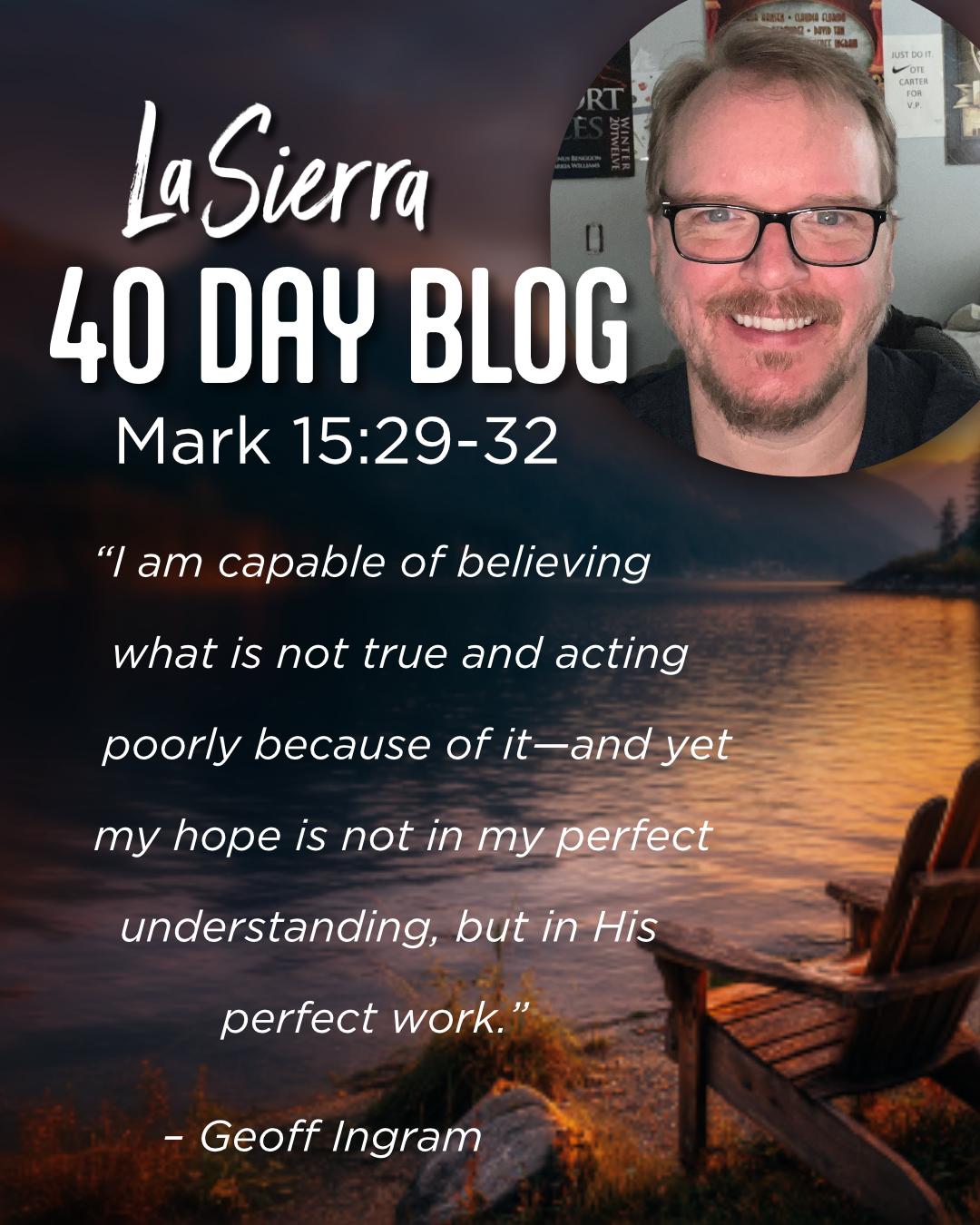
The same moment where people misunderstood, misjudged, and acted wrongly is the moment where Christ was at work securing mercy. This forces me to hold two truths at once: I am capable of believing what is not true and acting poorly because of it—and yet my hope is not in my perfect understanding, but in His perfect work.
So I find myself praying like David: “Search me… and know my heart… see if there is any offensive way in me…” Not trusting my own clarity, but asking God to uncover what I cannot see and to cleanse what I cannot fix.
Because deception has never been distant. As Ellen White wrote, “Many are deceived as to their true condition. They congratulate themselves that they are right when they are far from Jesus.” Throughout history, people have accepted what is false because it appeared reasonable or desirable. Even angels—beings who knew God firsthand—were not immune to deception, and some fell while still in the presence of truth.
That humbles me deeply.
So I ask: Lord, guard my mind. Protect my thoughts. Do not let me settle into what only appears true. Teach me to love truth more than comfort, more than certainty, more than being right. When I speak, let it be shaped by what is true, not by what is persuasive or easy.
Because if my standing with You depended on me never being deceived, I would have no hope. But it rests on Christ—faithful even when surrounded by misunderstanding, rejection, and deception. Even those who mocked Him were not beyond His mercy; in their blindness, they “knew not what they did,” and through that same cross, the way remained open for their forgiveness.
So I’m left asking: Lord, am I believing a lie? Am I humble enough to let You correct me? Am I honest enough to repent?
More than that—will I trust You enough to be corrected, to be led, and to be kept close, even when I cannot see clearly?
Geoff Ingram is honored to be a back balcony pew host since 2025—after a rigorous 15-year tryout (since 2010) of consistent sitting, standing, and strategic song participation.