
It was two days before the Passover and the Festival of Unleavened Bread. The chief priests and the scribes were looking for a way to arrest Jesus by stealth and kill him, for they said, “Not during the festival, or there may be a riot among the people.”
Mark 14:1-2 NRSV
It is at this time that we see Jesus approaching the end of his life. As the last supper draws nearer, Mark informs us that the chief priests and teachers of the law (ostensibly the highest religious authority at the time) are preparing to rid themselves of Jesus through clandestine means. Although officially the Sanhedrin did not have the power to kill citizens during the Roman occupation of Judea, it is not difficult to imagine that such a powerful collective would have the ability to execute their designs either through cooperation with the Roman government or other means.
Throughout history societal dissidents have been seen unfavorably by those who represent the status quo. Charitably, one can view this tendency towards continued order as a concern for the well-being of the public; an unwillingness by those in power to introduce unnecessary unease, unrest, and uncertainty into the lives of the masses. Perhaps more critically, one can view this phenomenon as nothing more than those who are in charge ensuring that they remain that way. Whether you view it as the Sanhedrin sincerely (if misguidedly) protecting the core of its religious order or desperately annihilating the spark of religious sedition in the name of its own power, the fact remains that Jesus’ teachings and rhetoric were deemed too far outside the window of acceptable discourse at the time. Decidedly so, as one can imagine how scandalous it would be at the time (as it would be in ours) to hear a man profess to be the son of the one true God. The price for his would-be indiscretions would be paid, unbeknownst to his followers, on the cross in short order.
It is easy to judge the pharisees of the time as short-sighted, religious zealots. However, it is always easy to view issues long-since decided in black and white. This degree of separation allows us to view the matter as closed, as irrelevant to our times and to our society. Sadly, however, this is not entirely the case. Although most of us are not religious authorities nor do most of us hold any high office, we still function as representatives of an alternate lifestyle mapped out so long ago by a dissident. Why then, do professed followers of Christ find it so easy to then turn around and implement exclusionary practices in their own lives and communities. Most of us (ideally) will never condemn anyone to death, but many of us are perfectly comfortable shunning those who we view as dissident ourselves. For many years I found it difficult to accept and show kindness to people in church who I viewed as different; not fitting into the mold I thought was acceptable before God. I then realized that there is no difference between me and my fellow Christian. Through Christ, there is no dividing line which deems our behaviors as acceptable and those of others as aberrant. We are, all of us who have accepted Christ as our redeemer, saved by grace or none of us are.
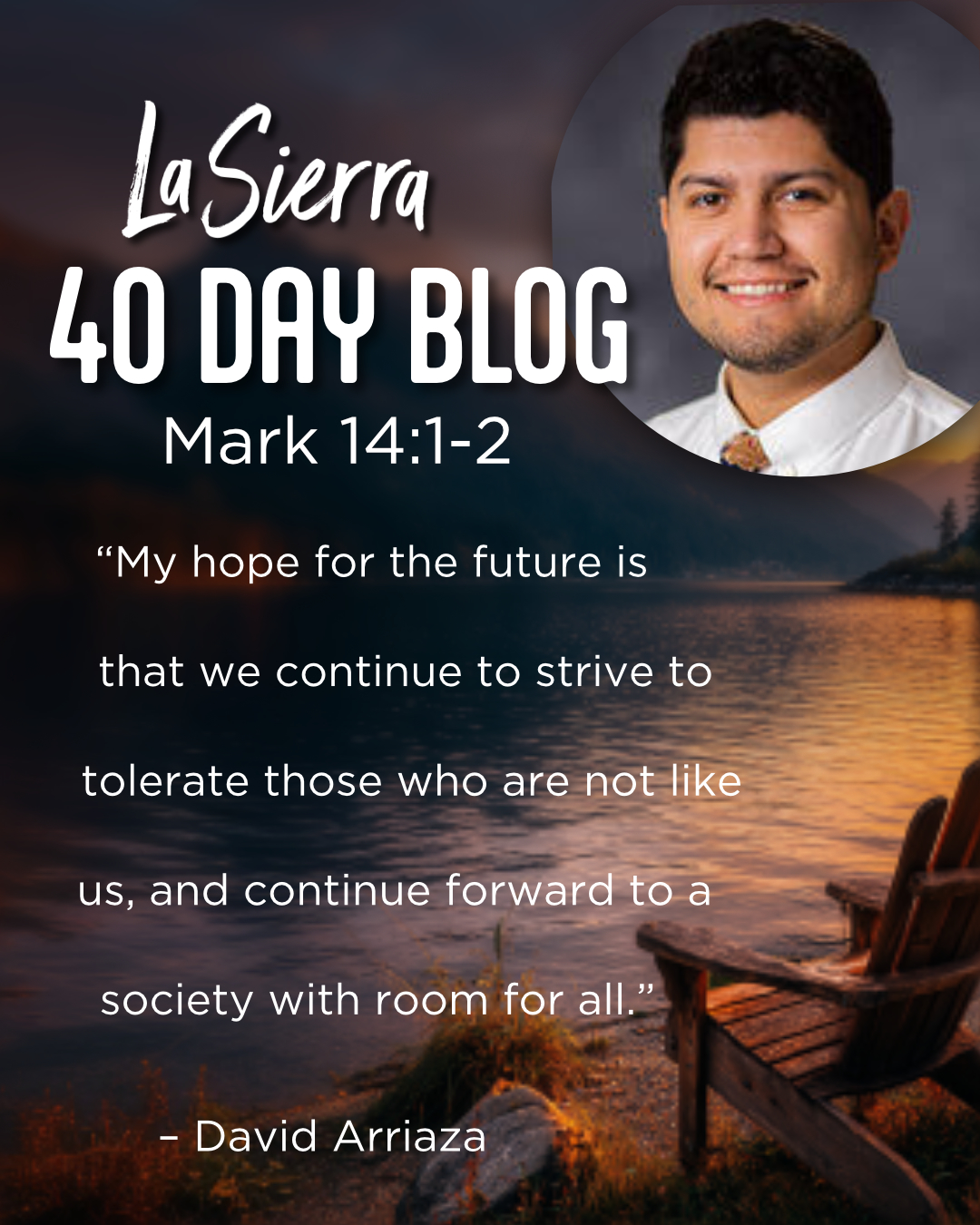
Human nature drives us to be wary of change, to stick close to those who are like us to and to steer clear of those who are not. This is, however, the beauty of the church as a collective of followers of Christ. We do not need to fear difference and change but can rather embrace what sets us apart, inversely drawing us closer. My hope for the future is that we continue to strive to tolerate those who are not like us, and continue forward to a society with room for all.
David Arriaza lives in Loma Linda and enjoys playing music.