
And the high priest stood up in the midst and asked Jesus, “Have you no answer to make? What is it that these men testify against you?” But he remained silent and made no answer. Again the high priest asked him, “Are you the Christ, the Son of the Blessed?” And Jesus said, “I am, and you will see the Son of Man seated at the right hand of Power, and coming with the clouds of heaven.”
And the high priest tore his garments and said, “What further witnesses do we need? You have heard his blasphemy. What is your decision?” And they all condemned him as deserving death. And some began to spit on him and to cover his face and to strike him, saying to him, “Prophesy!” And the guards received him with blows.
Mark 14:60-65 ESV
In Mark 14, Jesus is accused of saying He would destroy the temple and rebuild it in three days. What they heard was physical destruction. What He spoke about was the transformation of where God dwells, a shift from external structure to internal embodiment. His words were not empty, neither are ours. They carry structure, direction, and consequence.
The temple was never just a structure. It was a dwelling place, and that dwelling place is also within us. The misunderstanding of language, of meaning, of identity is something we still live out every day because we do the same thing with our own words, especially the ones that start with “I am.”
When God says, “I Am” in the Book of Exodus, God identifies with being itself – uncreated, un-contained, self-existent. So when we speak “I am,” we’re engaging in something more than description. We’re participating in identity formation. “I am” is more than a title, but a declaration.
Across languages, Hebrew (ehyeh asher ehyeh), Greek (ego eimi), Latin (ego sum), and now English, the phrase carries the same function to define existence. In English especially, “I am” has become a fixed identity statement. “I am tired. I am broken. I am healing. I am becoming.” What follows those words is rarely questioned, yet constantly reinforced.
What follows “I am” matters because thoughts become words, words become actions, actions become habits, habits become lifestyle, and lifestyle becomes identity. Scripture speaks of Christ living within us, and whether understood spiritually or experienced more internally, this indwelling is encountered through consciousness, the awareness where thoughts form, where identity takes shape, and where meaning is assigned.
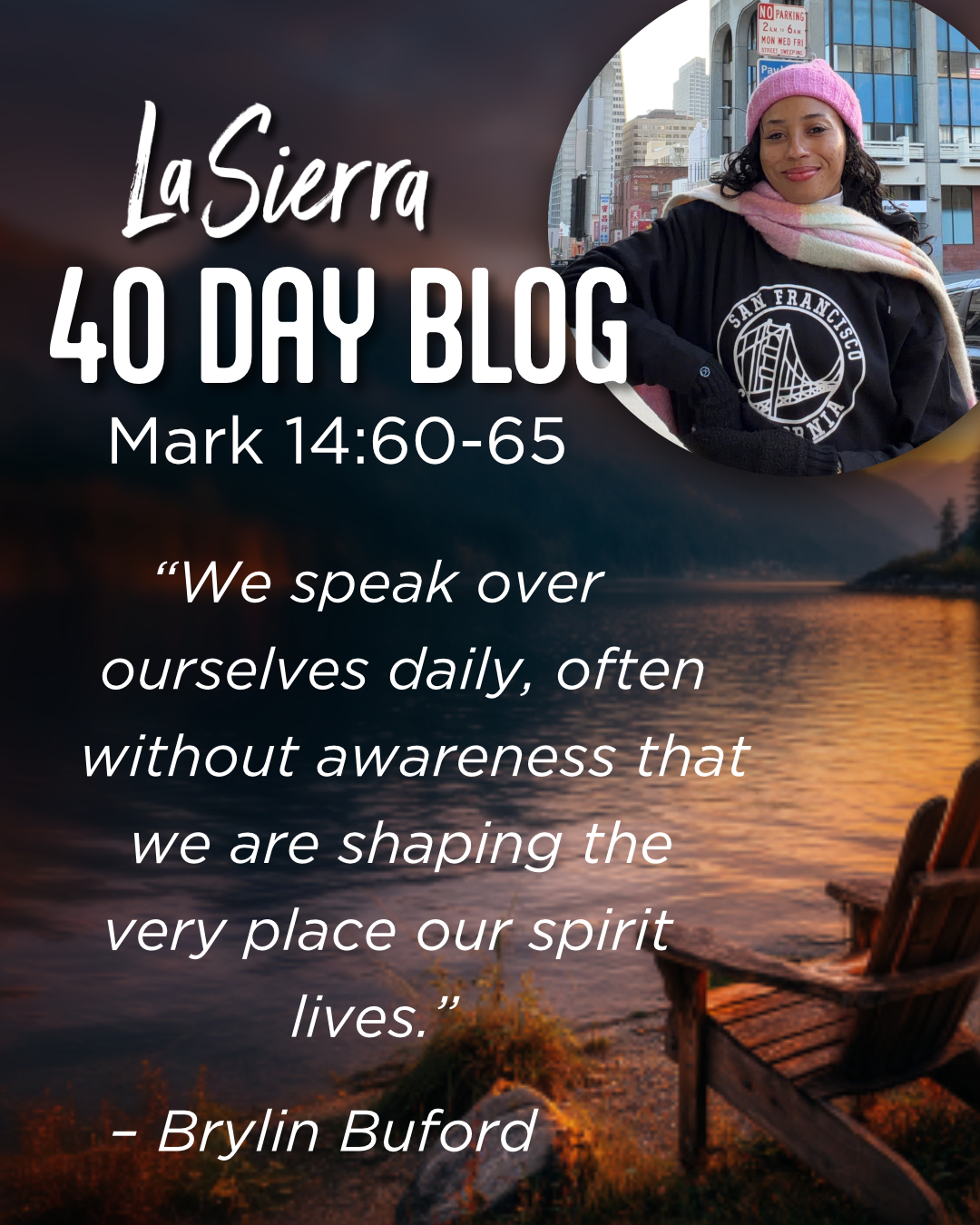
What we attach to “I am” becomes the architecture of the self. Just as the temple could be misunderstood, so can our words. We speak over ourselves daily, often without awareness that we are shaping the very place our spirit lives. We are not just describing who we are, we are rehearsing who we will become.
The power of “I am” does not disappear when we live out of alignment. In Exodus, “I am” establishes identity as something rooted in truth, being, and authority. When we are aligned with that Source, our words begin to reflect what is stable, grounded, and life-giving.
But when identity is shaped more by fear, perception, self-limiting beliefs, or past experience, we still use the same structure. We still say, “I am not enough. I am stuck. I am not worthy. I am sad.” Those words, used unconsciously, still form something because they borrow the structure of divine naming.
So to live out of alignment is not to become powerless. It is to borrow the language of power without awareness of its source. That source is not found in self-definition alone, but in God. It is through Christ, through His intercession and the indwelling of the Holy Spirit, that we come into true awareness, not a separate consciousness, but a consciousness awakened in God.
Awareness is not separate from God, it is one of the ways we encounter God. The more aware we become of what we are thinking, speaking, and agreeing with, the more aligned we become with the source of what is true.
“I am” is no longer an unconscious pattern of language. It becomes a reflection of the One who first declared it, because to be aware in God is to think, speak, and become in alignment with God.
Brylin Buford is a writer exploring the intersection of faith, identity, and inner transformation through a relationship with God, language, awareness, and lived experience.