
“And as soon as I had recognised the taste of the piece of madeleine soaked in… lime-blossom which my aunt used to give me… immediately the old grey house upon the street… rose up like a stage set…” Marcel Proust, Remembrance of Things Past
Marcel Proust’s novel recounts how tasting a madeleine cookie dipped in tea unlocked a flood of memories for the protagonist.
Sometimes the smallest things can elicit big emotional responses and tap into a deep well of emotions.
When my grandmother, Maria Dolores Sales, immigrated 5,250 miles from the Philippines with her family in 1930 to what was then the Territory of Hawaii, she left much behind that was familiar.
Her parents immigrated to work on the pineapple and sugar cane plantations in the Hawaii of the early 20th century. They made the journey to make a better life. Neighbors and coworkers had also immigrated from far-flung locales in search of upward mobility – and they brought with them their own distinctive cultural practices, languages, and cuisine.
My grandmother went to the local public school in Kahuku, where all the plantation workers lived, and she made friends with Japanese, Korean, Chinese, Portuguese, and fellow Filipino students. There were a few Caucasian (Haole) kids, but they were in the minority by far.
At lunch kids would share and trade homemade desserts. The most popular item my grandmother brought to school were cascaron rice balls coated with deliciously caramelized brown sugar. She would trade a cascaron for a Japanese mochi ball – or a cascaron for a Portuguese malasada.
Not only did she eat and enjoy these Filipino desserts, but she learned from her own mother how to make them. And for years the recipe only resided in the memories of the mothers and grandmothers who made them.
Years later when my own kids would visit their great-grandmother, Maria Dolores, she would often prepare cascaron. Every occasion to see her great-grandkids was a special occasion.
That dessert became synonymous with family gatherings and festive occasions filled with hugs, laughter and feasts – whether for Easter, Thanksgiving, or Christmas.
And to this day I imagine the Christmas tree surrounded by presents when I eat a cascaron. Sometimes it’s a Thanksgiving table that comes to mind, laden with food. Or perhaps it is an Easter egg hunt that pops into the cinema in my head as I taste a cascaron.
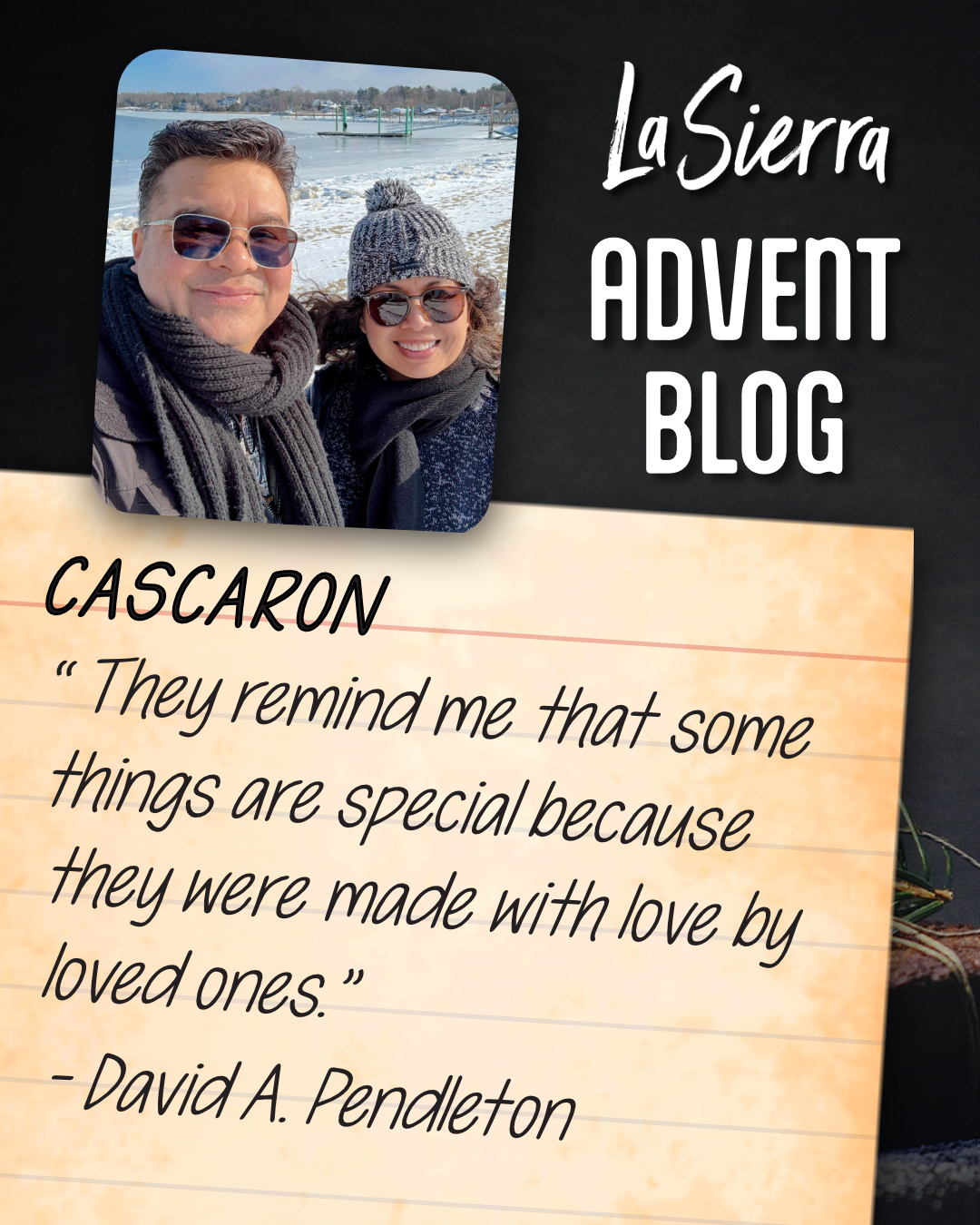
Cascaron came to stand for special times with family and loved ones. They remind me that some things are special because they were made with love by loved ones.
Over the years my wife finally persuaded Grandma to put pen to paper and write down the recipe. It’s in a box in our garage in Hawaii. Fortunately, an intentionally abbreviated version of her recipe was submitted to be part of a Hawaii cookbook back in the late 1990s when I was serving as an elected member of the Hawaii House of Representatives. The fascinating thing is that even when the recipe is followed meticulously, it does not quite taste like Grandma’s – probably just because I know it was not made by Grandma.
But like Marcel Proust’s madeleine cookie, just tasting them brings up a whole host of welcome memories.
The psalmist promises us that God has prepared for us good and wonderful things: “O taste and see that the Lord is good; happy are those who take refuge in him” (Psalm 34:8).
This Christmas season we ought to keep in mind the reason for the season. Christ became one of us and one with us to save us. Salvation was made with love by one who deeply and relentlessly loves us.
Grandma Dolores’ Cascaron Recipe (Details & Instructions Added)
Cascaron is a popular Filipino street food dessert. It is deep-fried glutinous rice balls coated in a caramelized brown sugar glaze. The name comes from the Spanish word for “eggshell” due to its common spherical shape and slightly crunchy exterior.
Cascaron are enjoyed for their unique texture: they are golden brown and crispy on the outside, yet dense and chewy (mochi-like) in the center. They are often presented on skewers.
Yields: Approximately 28 balls
Prep time: 20 minutes
Cook time: 30 minutes
Ingredients:
For the Rice Balls:
2 cups glutinous rice flour (mochiko flour)
1 cup grated coconut
1/2 cup sugar (for the dough mixture)
Approximately 1 cup of water (add gradually until a dough forms)
Coconut oil, for deep frying
For the Glaze:
1 cup brown sugar
1/2 cup water
Instructions:
Step 1: Prepare the Dough: In a large bowl, combine the glutinous rice flour, grated coconut, and 1/2 cup of sugar. Gradually add water, mixing until a smooth, pliable dough forms.
Step 2: Shape the Balls: Roll the dough into small, golf-ball-sized spheres.
Step 3: Deep Fry: Heat a generous amount of coconut oil in a deep pan or pot over medium heat. Carefully drop the rice balls into the hot oil and deep-fry until golden brown and crispy on the outside.
Step 4: Remove the fried balls and place them on paper towels to drain excess oil.
Step 5: Prepare the Glaze: In a separate wide pan, combine (preferably brown) sugar and 1/2 cup of water. Bring the mixture to a simmer over medium heat, stirring frequently until it thickens into a caramel-like syrup.
Step 6: Coat the Cascaron: Reduce the heat to low to prevent the sugar from caramelizing further. Add the fried rice balls to the syrup mixture and toss them using two wooden spoons until each ball is evenly coated with the glaze.
Step 7: Cool and Serve: Turn the coated cascaron out onto a cookie sheet or large plate to cool completely. Once cool, they can be served individually or skewered on sticks, as is traditional for this popular Filipino street food.
David A. Pendleton is an alumnus of La Sierra University, where he met his wife, Noemi. They spend winter and summer in New England and spring and autumn in Southern California. They have four adult children.